
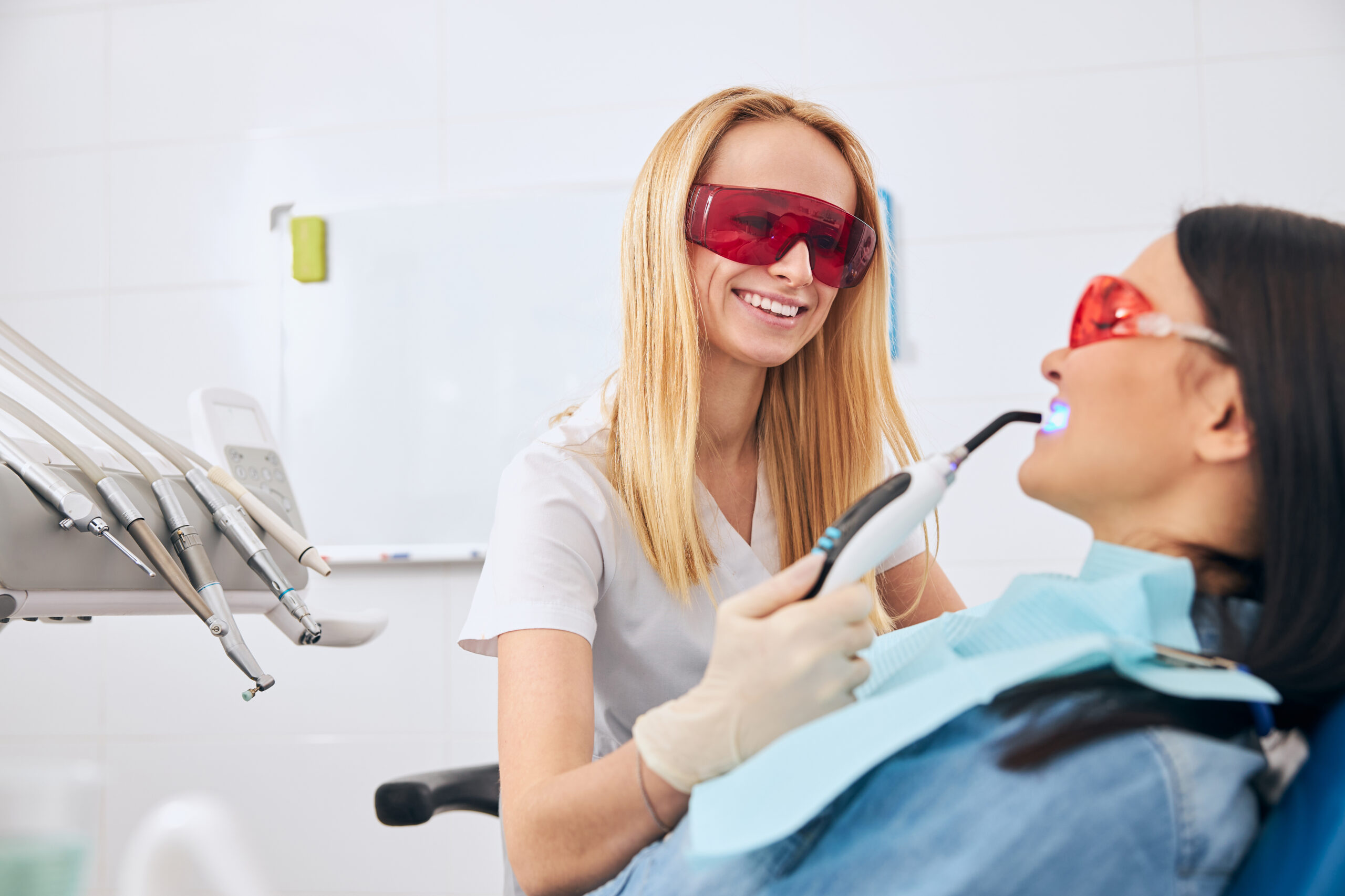
Many Beaumont residents want a brighter smile. But a common question stops them in their tracks: is teeth whitening safe for your enamel and gums in Beaumont? The short answer is yes — when done correctly. Understanding the facts helps you make a confident, informed decision about your smile.
At Gulfside Dental & Orthodontics – Beaumont, Dr. Ashley DeMarco helps patients separate myths from facts. This article covers what whitening does to your teeth, who may not be a good candidate, and how to whiten safely.
How Teeth Whitening Affects Your Enamel
Teeth whitening products use peroxide-based bleaching agents. These agents open the tiny pores in your enamel to lift stains from within. This process is temporary and does not permanently damage healthy enamel.
Research from the American Dental Association supports professional whitening as safe. However, overuse or using products incorrectly can cause problems. Enamel erosion is more often linked to acidic foods than to whitening gel itself.
Professional treatments at a dental office use carefully controlled concentrations. This reduces the risk of overexposure. Over-the-counter strips and trays carry more risk because patients may misuse them.
- Professional-grade whitening gels are regulated for safe concentration levels
- Custom trays fit your teeth precisely, reducing gel contact with gums
- In-office treatments are monitored by a trained dental professional
- At-home kits prescribed by your dentist are safer than store-bought options
Is Teeth Whitening Safe for Your Gums in Beaumont?
Gum sensitivity is one of the most common concerns with whitening. Peroxide gel can irritate gum tissue if it contacts them directly. This is why proper application matters so much.
In a dental office, your gums receive a protective barrier before treatment begins. This barrier shields soft tissue from bleaching agents. That step alone dramatically reduces gum irritation.
Some patients experience temporary gum soreness after whitening. This usually resolves within 24 to 48 hours. If irritation persists, contact your dentist right away.
Patients with existing gum disease should not whiten until their condition is treated. Bleaching agents can worsen inflamed or receding gum tissue. Dr. DeMarco always evaluates gum health before recommending any whitening treatment.
Who Should Avoid Teeth Whitening?
Not every patient is a good candidate for whitening. Certain conditions make whitening less effective or potentially harmful. Knowing when to wait protects your long-term oral health.
Patients in the following situations should speak with Dr. DeMarco before whitening:
- Active gum disease: Whitening can worsen inflammation and sensitivity
- Tooth decay: Peroxide can penetrate cavities and cause pain
- Cracked or chipped teeth: Gel may enter the tooth and cause internal sensitivity
- Crowns, veneers, or bonding: Whitening does not change the color of restorations
- Pregnant or nursing patients: Whitening is generally postponed as a precaution
- Children under 16: Tooth pulp is still developing and more sensitive to bleaching
Patients with naturally sensitive teeth may still whiten with guidance. Lower-concentration gels and shorter treatment times can help. Your dentist can customize a plan that minimizes discomfort.
Professional Whitening vs. Store-Bought Options
The whitening aisle at any Beaumont pharmacy can feel overwhelming. Strips, gels, pens, and trays all promise dramatic results. But not all products deliver the same safety or effectiveness.
Store-bought strips use lower peroxide concentrations. They also use a one-size-fits-all design that may not fit your teeth well. Gel can leak onto gums and cause irritation.
Professional whitening through a dental office offers several clear advantages. As part of Cosmetic Dentistry Beaumont services, professional whitening is tailored to your exact needs. You also benefit from a full dental exam before treatment begins.
If you prefer whitening at home, your dentist can provide custom-fitted trays. These trays hold gel securely against your teeth. They keep the gel away from your gum tissue for safer, more even results.
Tips for Whitening Safely at Home
Whether you use a dentist-prescribed kit or a store product, following best practices matters. Safe habits protect both your enamel and your gum tissue during treatment.
Here are simple steps to whiten more safely:
- Always follow the instructions on the product label or your dentist’s guidance
- Never leave whitening gel on longer than recommended
- Use a soft-bristle toothbrush to avoid abrading enamel
- Avoid acidic foods and drinks immediately after whitening
- Use a sensitivity toothpaste in the days before and after treatment
- Take breaks between whitening sessions to give enamel time to recover
Post-whitening care also matters. Avoid coffee, tea, red wine, and dark sauces for at least 48 hours. These substances can restain freshly whitened teeth quickly.
If you experience significant pain during whitening, stop immediately. Pain is a signal that something may not be right. Schedule a visit with your dentist before continuing treatment.
How Dr. DeMarco Approaches Whitening at Gulfside Dental
At Gulfside Dental & Orthodontics – Beaumont, every whitening consultation starts with a full exam. Dr. DeMarco checks your enamel thickness, gum health, and any existing restorations. This step ensures whitening is appropriate for your specific situation.
Patients with concerns about sensitivity receive lower-concentration options. Those with healthy teeth and gums may be great candidates for in-office whitening. The goal is always a result that looks natural and feels comfortable.
Teeth whitening is just one part of a broader approach to smile care. Services like Cosmetic Dentistry Beaumont include treatments that complement whitening results. Veneers, bonding, and Invisalign can work alongside whitening for a complete smile transformation.
If you have been wondering whether whitening is right for you, a professional consultation is the best starting point. You will get honest answers and a plan that fits your unique smile goals. Book Now to schedule your appointment with our team.
Frequently Asked Questions
Does teeth whitening permanently damage enamel?
No. When used correctly, professional teeth whitening does not permanently damage enamel. The process temporarily opens enamel pores to remove stains. With proper use and professional supervision, enamel integrity is maintained.
How long does tooth sensitivity last after whitening?
Most patients experience sensitivity for 24 to 48 hours after whitening. Using a sensitivity toothpaste before and after treatment helps reduce discomfort. If sensitivity lasts longer than a few days, contact your dentist for guidance.
Can I whiten my teeth if I have crowns or veneers?
Whitening products do not change the color of dental restorations like crowns or veneers. Whitening only affects natural tooth enamel. Your dentist can help you decide the best approach if you have existing restorations.
Is professional whitening better than drugstore products?
Professional whitening is generally more effective and safer than over-the-counter options. Dentist-supervised treatments use custom-fitted trays and regulated peroxide concentrations. This reduces the risk of gum irritation and uneven results.
How often can I safely whiten my teeth?
Most dentists recommend whitening no more than once or twice per year. Overuse can increase sensitivity and wear down enamel over time. Your dentist in Beaumont can recommend a schedule that fits your smile goals safely.